Immagini di The Legacy Museum: From Enslavement To Mass Incarceration
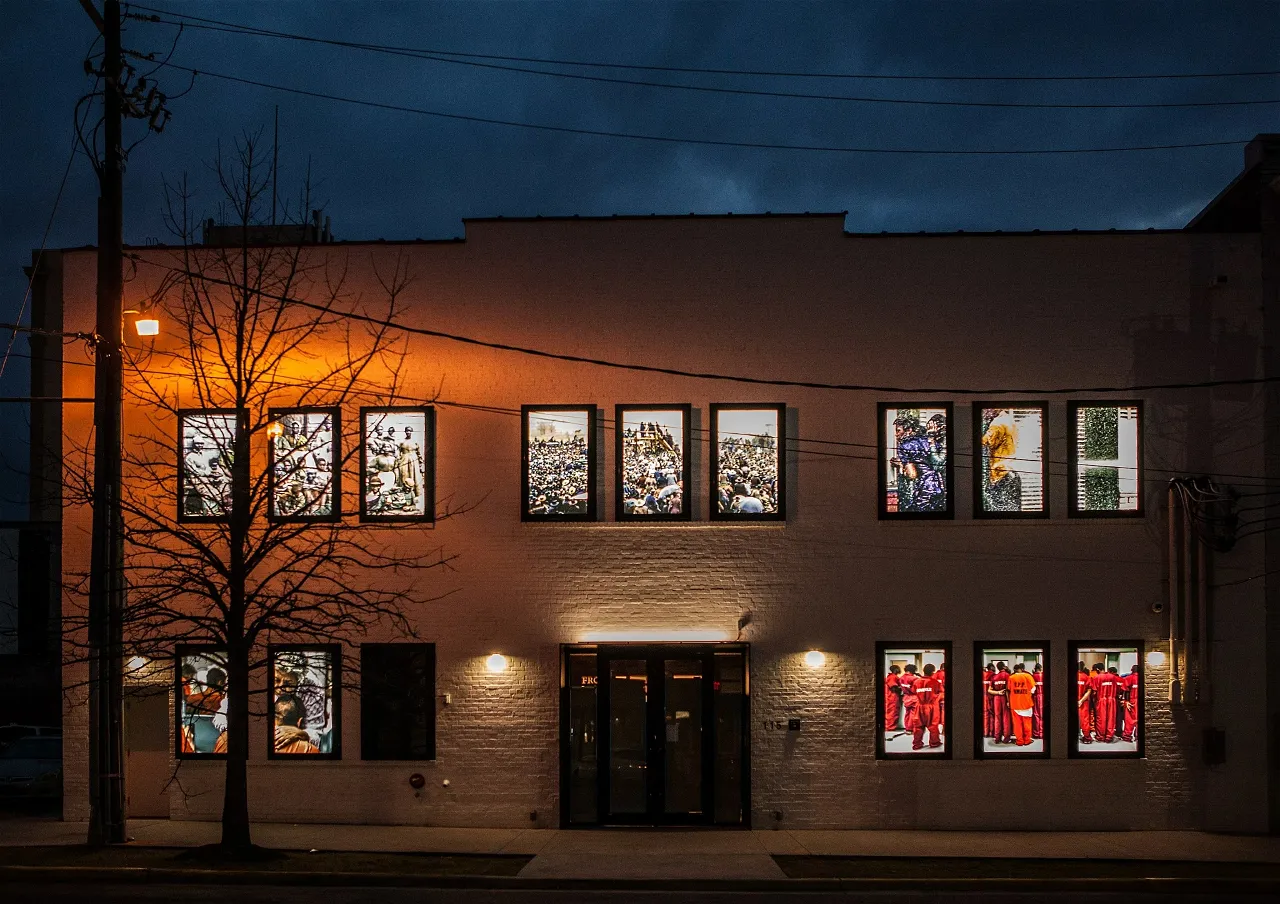

The Legacy Museum: From Enslavement To Mass Incarceration è un museo a Montgomery in Stati Uniti d'America.
Storia & Antropologia Specializzato & Alternativo
400 N. Court Street, Montgomery
Non sono state trovate mostre a The Legacy Museum: From Enslavement To Mass Incarceration.
Il The Legacy Museum: From Enslavement To Mass Incarceration ha 3 valutazioni.
The Legacy Museum: From Enslavement To Mass Incarceration en Montgomery, Alabama, ofrece una experiencia poderosa y estimulante que explora la historia de la injusticia racial en Estados Unidos. Los visitantes elogian constantemente al museo por su mirada exhaustiva e implacable a la historia del país en relación con la esclavitud, los linchamientos, la segregación y el encarcelamiento masivo.
Las exposiciones del museo se describen como meticulosamente investigadas, visualmente impactantes y emocionalmente conmovedoras. Muchos críticos destacan el uso eficaz de pantallas interactivas, narraciones personales y artefactos históricos para dar vida al tema. El diseño cronológico ayuda a los visitantes a comprender las conexiones entre las injusticias pasadas y los problemas actuales en el sistema de justicia penal.
Si bien el contenido es innegablemente denso y puede ser emocionalmente desafiante, la mayoría de los visitantes encuentran la experiencia profundamente educativa y necesaria. El museo a menudo se describe como revelador, incluso para aquellos que se consideran bien informados sobre los temas tratados.
Algunos visitantes mencionan que ciertas áreas pueden estar abarrotadas, lo que podría afectar la experiencia visual de algunas exhibiciones. Algunos también notan que el museo puede ser abrumador debido a la gran cantidad de información presentada, lo que sugiere que múltiples visitas podrían ser beneficiosas para una apreciación completa.
El personal recibe altas calificaciones por su conocimiento y amabilidad, lo que mejora la experiencia general. Muchos críticos también aprecian la ubicación del museo en Montgomery, dado el importante papel de la ciudad en la historia de los derechos civiles.
En general, The Legacy Museum es ampliamente considerado como una experiencia educativa esencial que proporciona una mirada integral e implacable a un aspecto difícil pero crucial de la historia estadounidense. Se considera una visita obligada para cualquier persona interesada en comprender los impactos a largo plazo del racismo sistémico en los Estados Unidos.

We visited the Legacy Museum on Jan 8, 2026 as part of Road Scholar's "The Civil Rights Movement - Atlanta, Montgomery, Selma, Birmingham" program. It is one of the three Equal Justice Initiative (EJI) Legacy sites in Montgomery, AL, and one of the two where photography is not allowed. The latter was emphasized at the security checkpoint, of which there was only one line. I surrendered my foldable (smartphone) tripod to the staff, and would later do it two more times at the other two sites. Within the exhibition halls, staff members are positioned every 100 feet (give or take) to ensure visitors are on their best behaviors, i.e. no photography, no vandalism, etc.
The transatlantic slave trade is the subject of the first two halls, with the first focusing on the transits of the captured from Africa. Sets of pictorial, written and video content fill every wall. There is no particular order of viewing. The next hall continues with the arrival, transactions and transits from ports to new colonies in the New World. Life-sized models of slaves naked and in chains act as passageway that visitors pass to move on. Despite being previously informed, I did not understand the sheer volume of the museum's content. I stopped to read every content in detail because of the no-photography policy. By the time I was done perusing the transatlantic slave trade, more than 30 minutes had passed.
One section consists of small rooms designed to look like prison cells, each showing a brief holographic projection of a moment in the life of a slave. These projections are triggered by motion sensors. Another hall focuses on federal and state court decisions - most of them ruling against African-Americans - as well as numerous hate crimes and other (violent) racial injustices, all of which that had occurred since Reconstruction. Past that is a larger hall that displays copies of newspaper ads of slaves for sale on one side, and life during Reconstruction on the other. I had started to peruse the latter when I realized that I was approaching two hours in time spent in the museum. Deciding to head on to the other two sites, I was surprised to discover many more sections - including an art gallery - and the volume of content in each that I would miss.
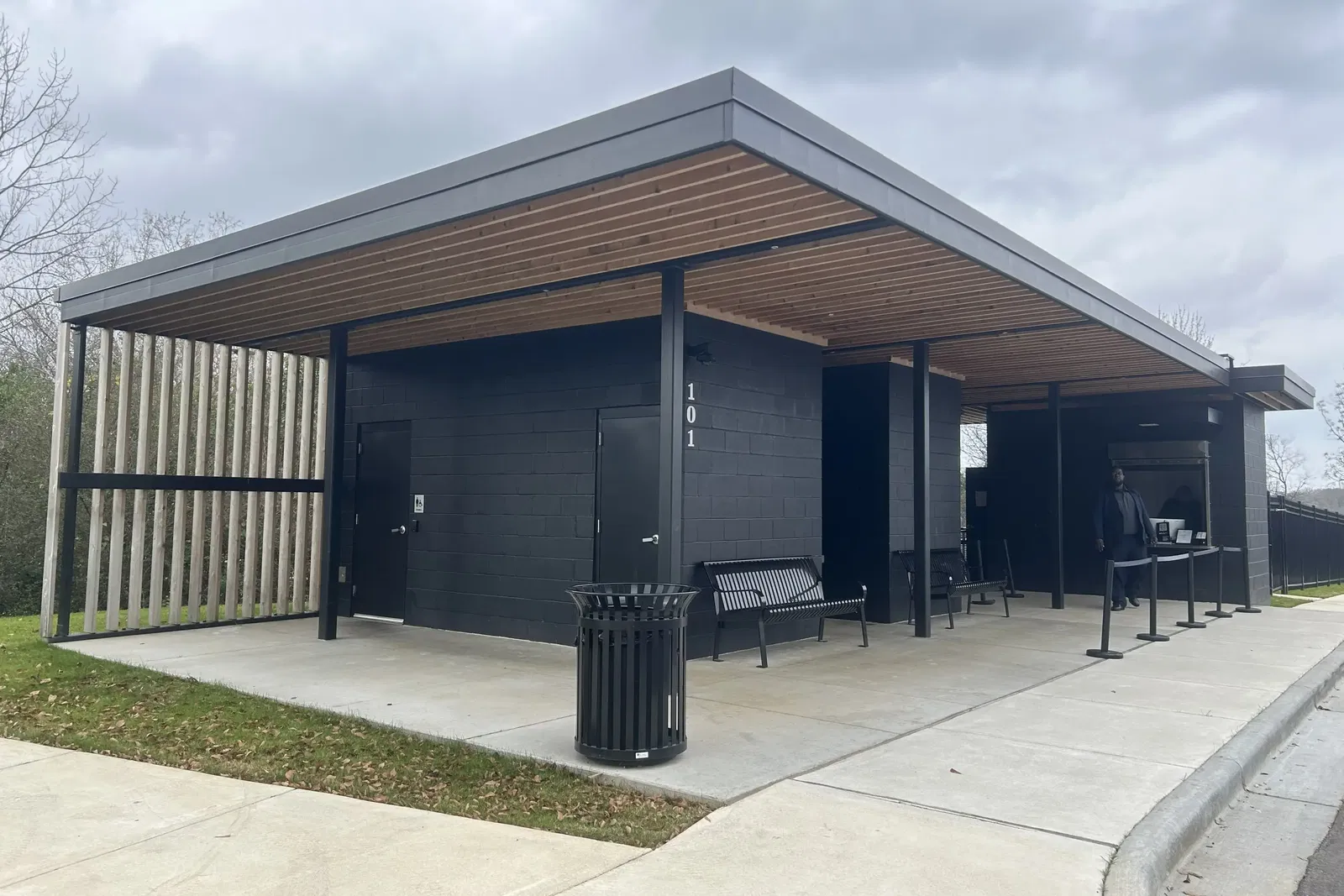
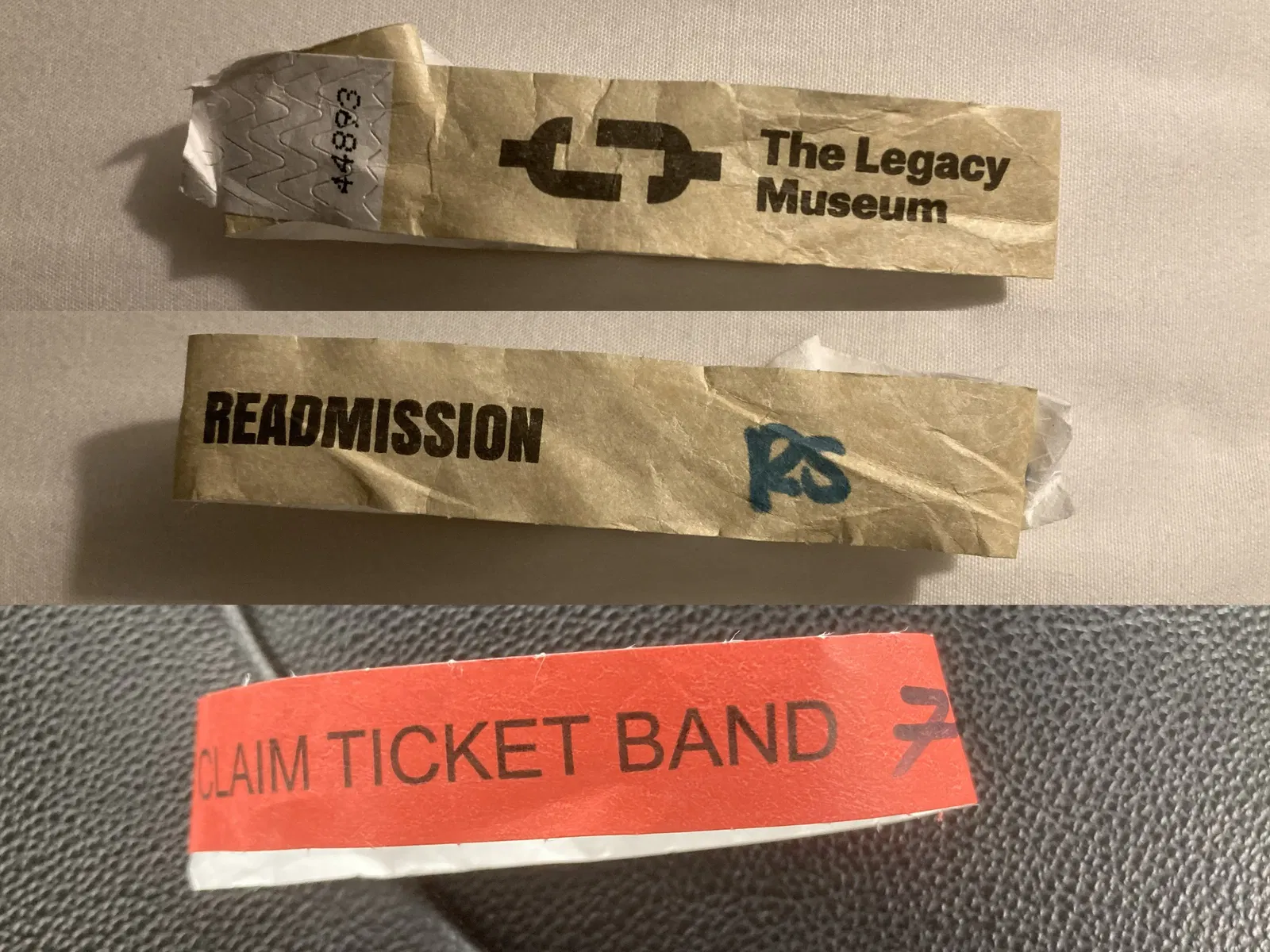
The Legacy Museum requires up to a day to truly appreciate its treasure. It is certainly worth visiting given its low admission price ($5 as of Jan 2026). However, I do not give this 5 stars because of the unnecessary security checkpoint to do the boat ride from Boat Launch at 101 Morris Street to Freedom Monument Sculpture Park, and vice versa. See attached image for further details
At 12:56pm, after visiting the National Memorial for Peace and Justice (NMPJ), I showed up at Boat Launch. There was a security checkpoint. I was told to turn over my tripod before getting on the boat. The big, burly bespectacled guy in the suit claimed that tripods could be used to vandalize the sculptures, and I could take the boat back and to this pier to get it back. He gave no explanation as to how a tripod would be a hazardous or dangerous object on a boat ride itself. The Sculpture Park has its own security checkpoint where I would turn over the tripod, and I wasn’t planning on coming back to this pier just to pick up my tripod. It would be a waste of time. So I waited for the shuttle to take me back to the Legacy Museum after stopping over at NMPJ.
When I finally arrived at Sculpture Park, 45 minutes of my time was wasted. This limited the time spent there. There was no necessity to have security checkpoint at Boat Launch when Sculpture Park has its own security checkpoint. Until EJI Legacy updates their policy to one that makes sense, this EJI site gets no more than three stars.
Visitato il 8 gen 2026
Terrific exhibit. Powerful and factual. Informative historical narrative of the experiences of enslaved peoples and the contemporary ramifications. Highly recommended!
Visitato il 4 mag 2025
Questa valutazione si basa sulla valutazione di questo museo su diverse altre piattaforme.
Scopri i musei nei dintorni di The Legacy Museum: From Enslavement To Mass Incarceration e di Montgomery.