Images of King Center For Non-violent Social Change


In 1981, the headquarters of The King Center were relocated to the Martin Luther King Jr. National Historical Park facility on Auburn Avenue. This location is of particular interest to visitors as it includes King's birth home and the Ebenezer Baptist Church, where he preached from 1960 until his death. These sites offer a unique insight into King's life and work, making them a significant part of any visit to The King Center.
A memorial tomb was dedicated in 1977, and the remains of Martin Luther King Jr. were moved from South View Cemetery to a plaza situated between The King Center and the Ebenezer Baptist Church. Visitors to The King Center can also see Martin Luther King Jr.'s gravesite and a reflecting pool located next to Freedom Hall. These sites provide a solemn and reflective space for visitors to pay their respects to the civil rights leader.
History & Anthropology Historic house Person & Artist Religion Religious building
#1 Religious buildings in Georgia #1 Religion museums in Georgia #2 Person & artist museums in Georgia #1 Historic houses in Georgia #4 Museums open on Monday in Georgia #2 History & Anthropology in Georgia #1 Free museums in Georgia #6 Religious buildings in United States #18 Religion museums in United States #25 Person & artist museums in United States #39 Historic houses in United States #84 Museums open on Monday in United States #53 History & Anthropology in United States #28 Free museums in United States #1 Religion museums in Atlanta #2 Person & artist museums in Atlanta #1 Historic houses in Atlanta #3 Museums open on Monday in Atlanta #1 History & Anthropology in Atlanta #1 Free museums in Atlanta
449 Auburn Avenue, Atlanta
No exhibitions in King Center For Non-violent Social Change have been found.
King Center For Non-violent Social Change has 2 ratings.
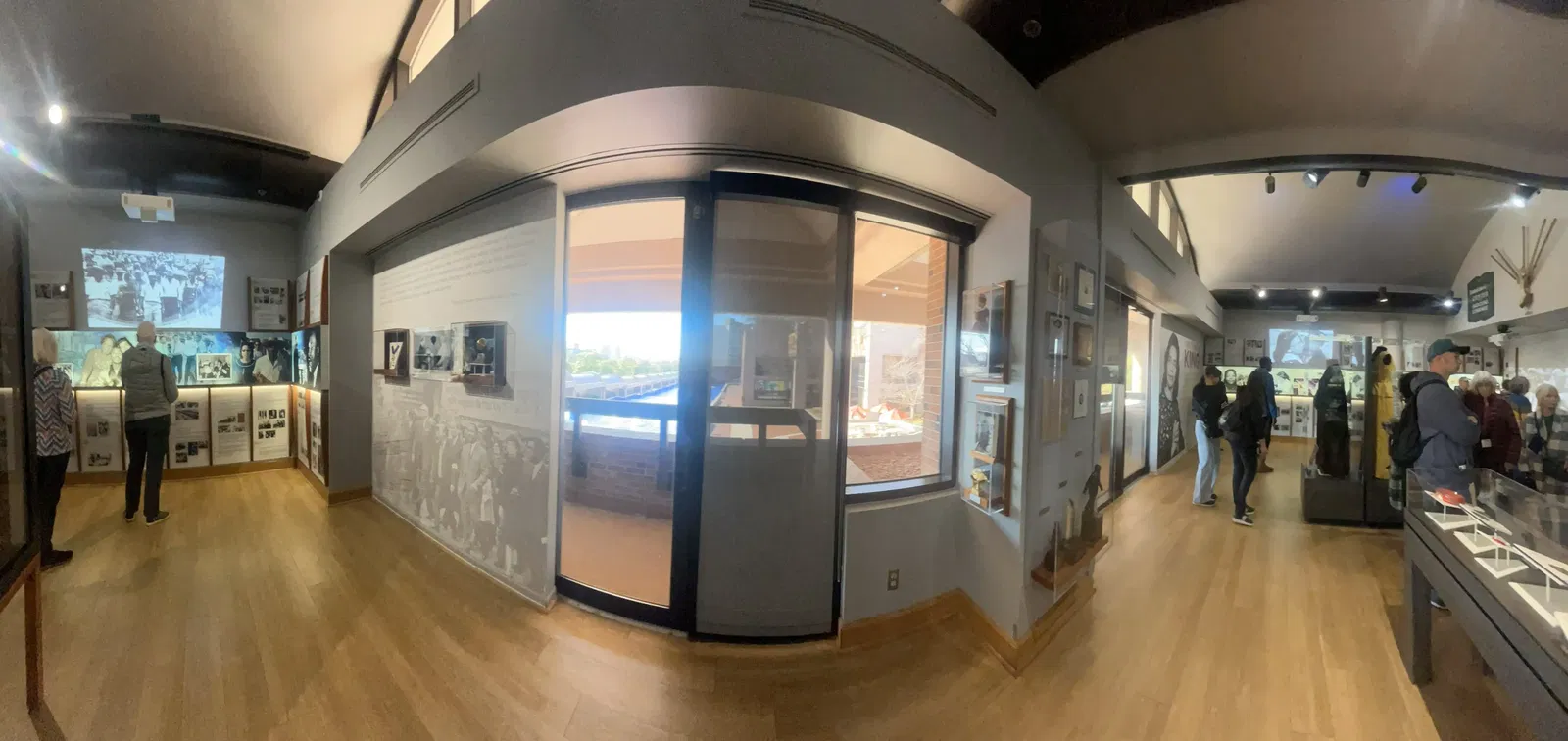
The King Center For Non-violent Social Change in Atlanta is a significant institution dedicated to preserving the legacy of Dr. Martin Luther King Jr. and promoting his philosophy of non-violence. Visitors often appreciate the center's informative exhibits that chronicle the Civil Rights Movement and Dr. King's life. The center houses important artifacts, including Dr. King's papers and personal items, which many find deeply moving.
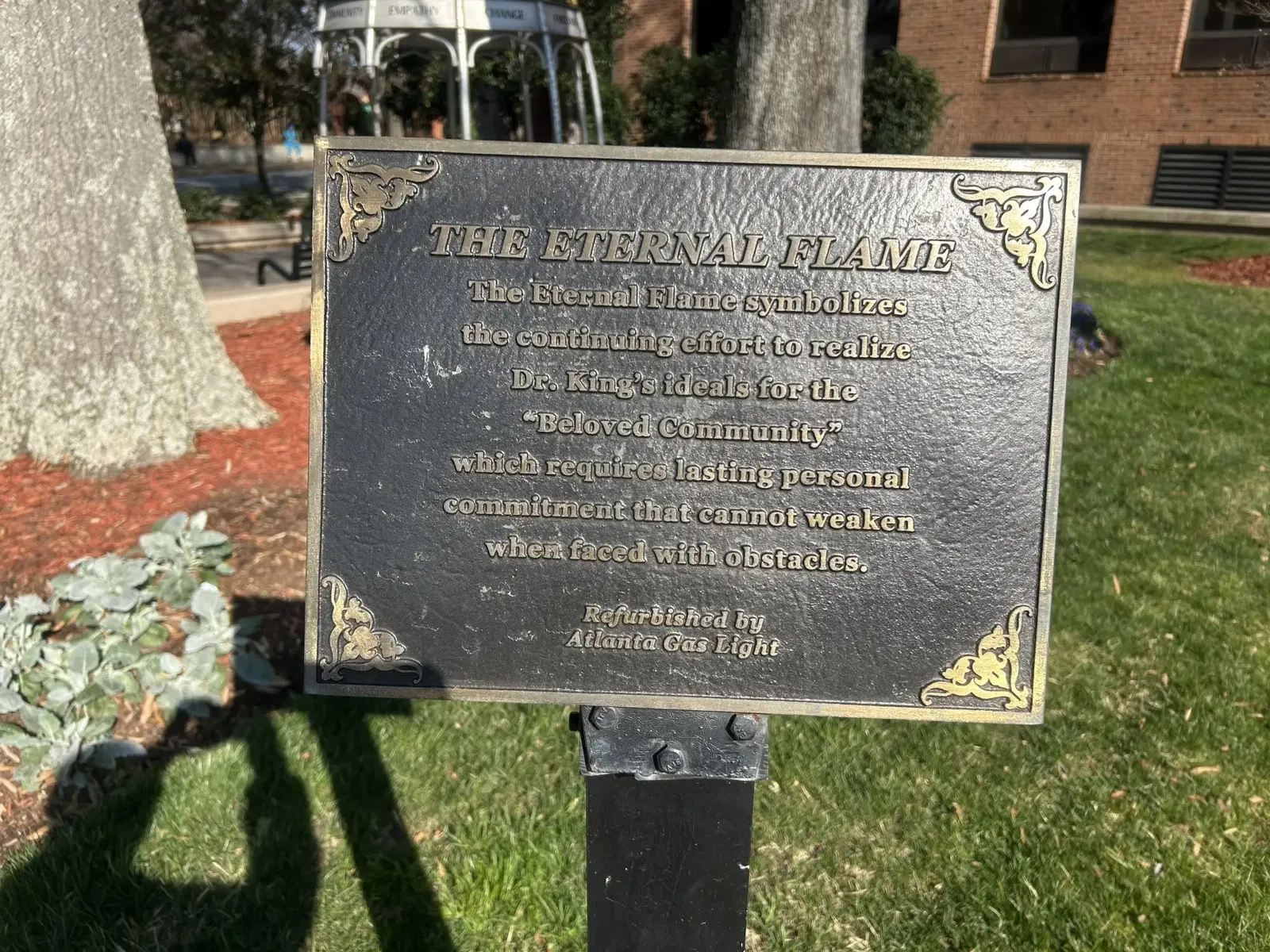
The center's peaceful grounds, including the reflecting pool and eternal flame, offer a space for contemplation that resonates with many visitors. The adjacent tomb of Dr. King and Coretta Scott King is frequently mentioned as a powerful and somber experience.
While most visitors find the center educational and inspiring, some note that certain areas of the exhibits could benefit from updates or renovations to enhance the overall experience. A few reviewers mention that the self-guided nature of the visit might leave some wanting more in-depth information or context.
The center's location within the Martin Luther King Jr. National Historical Park is seen as a positive, allowing visitors to explore related sites nearby. However, some visitors suggest allocating enough time to fully appreciate all the park has to offer.
Overall, the King Center is widely regarded as an important cultural and historical site that provides valuable insights into the Civil Rights Movement and Dr. King's enduring impact on American society.

We visited the Freedom Hall museum gallery, located on the campus of the Martin Luther King, Jr. Center for Nonviolent Social Change, aka King Center, on Jan 5, 2026 as part of Road Scholar's "The Civil Rights Movement - Atlanta, Montgomery, Selma, Birmingham" program. 45 minutes was scheduled for this admission-free visit. That was barely enough time to see the gallery and the grand water fountain (listed as "Dr. Martin Luther King Jr Fountain" on Google). The tombs of Dr. King and Mrs. King lay towards the west side of the fountain.
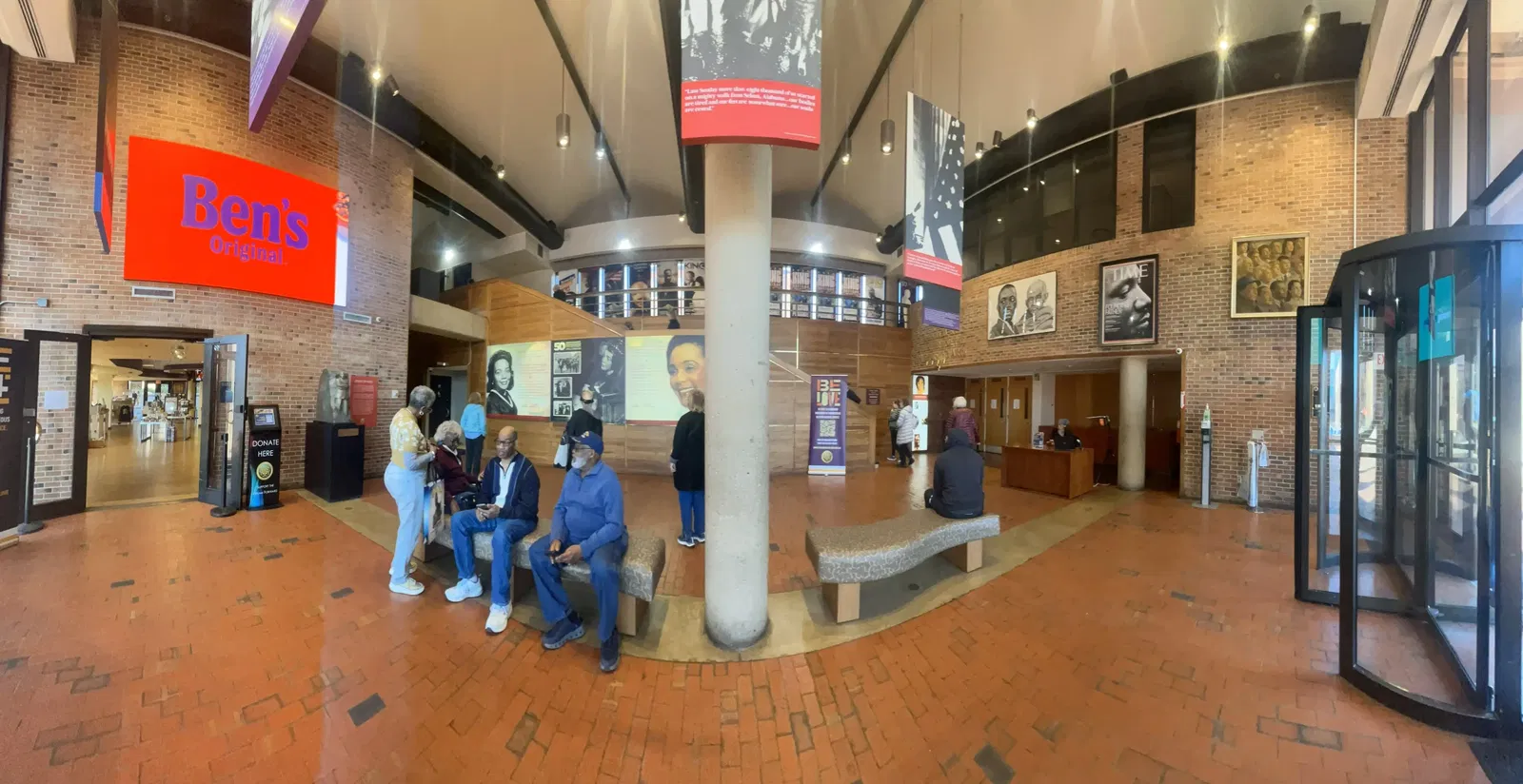
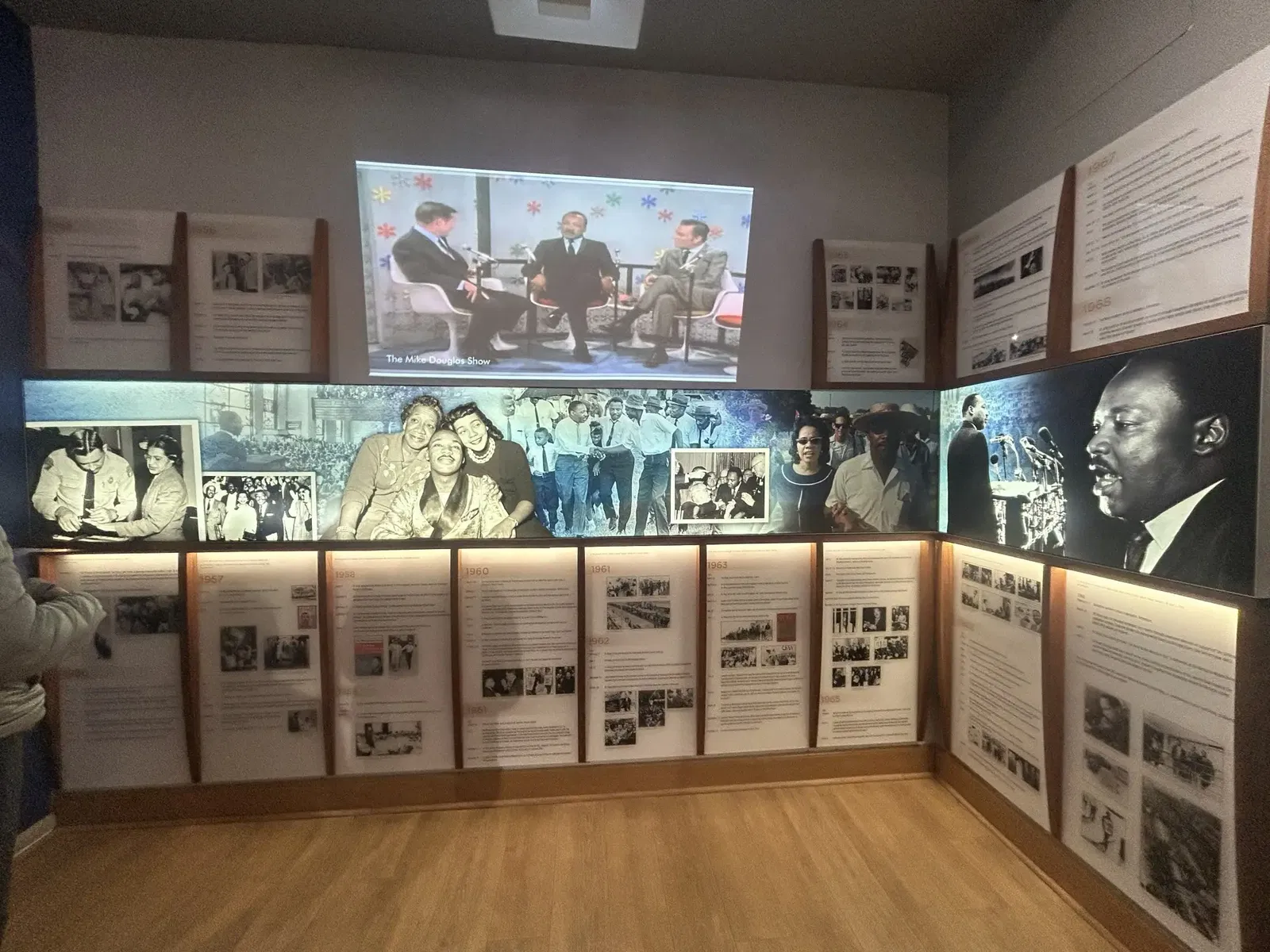
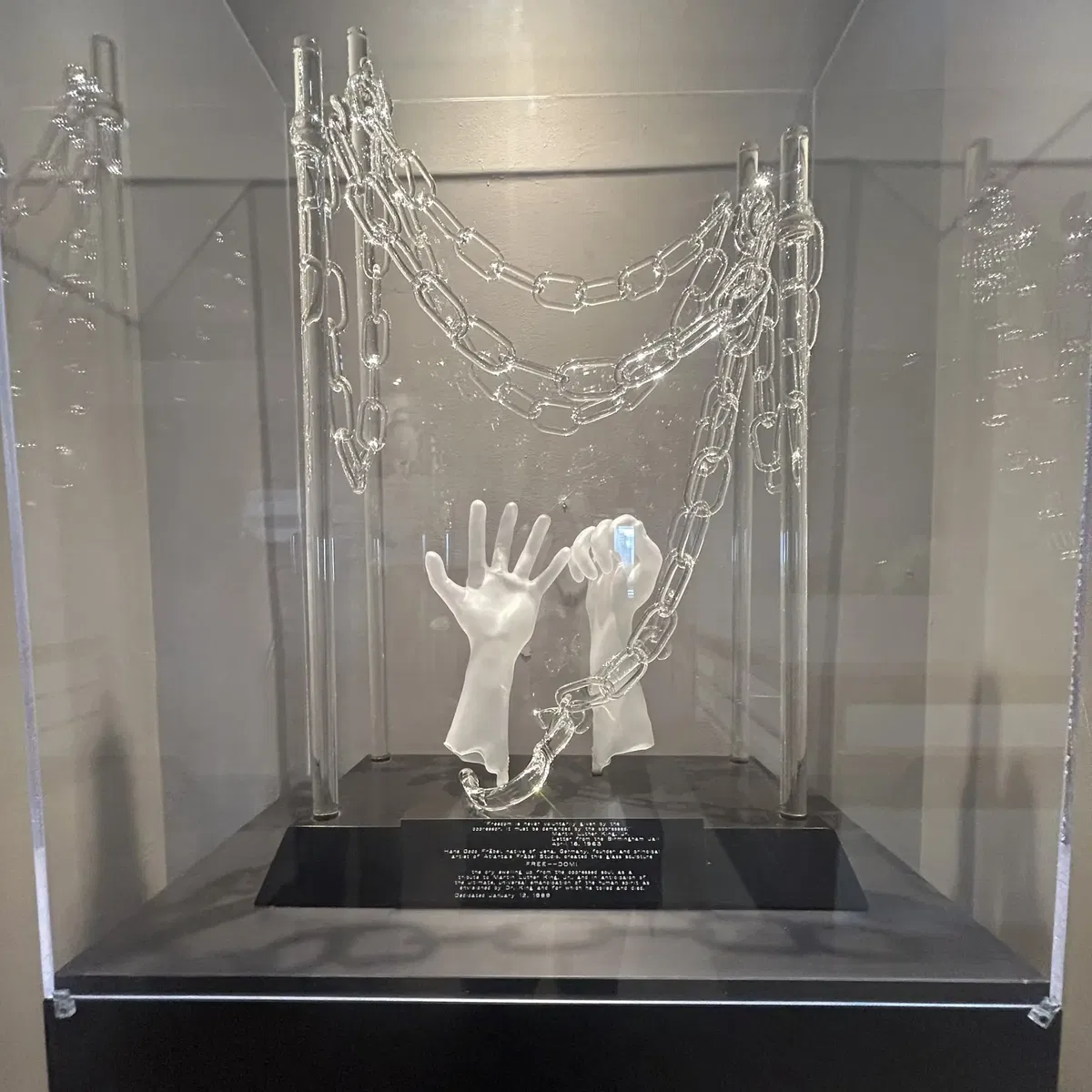
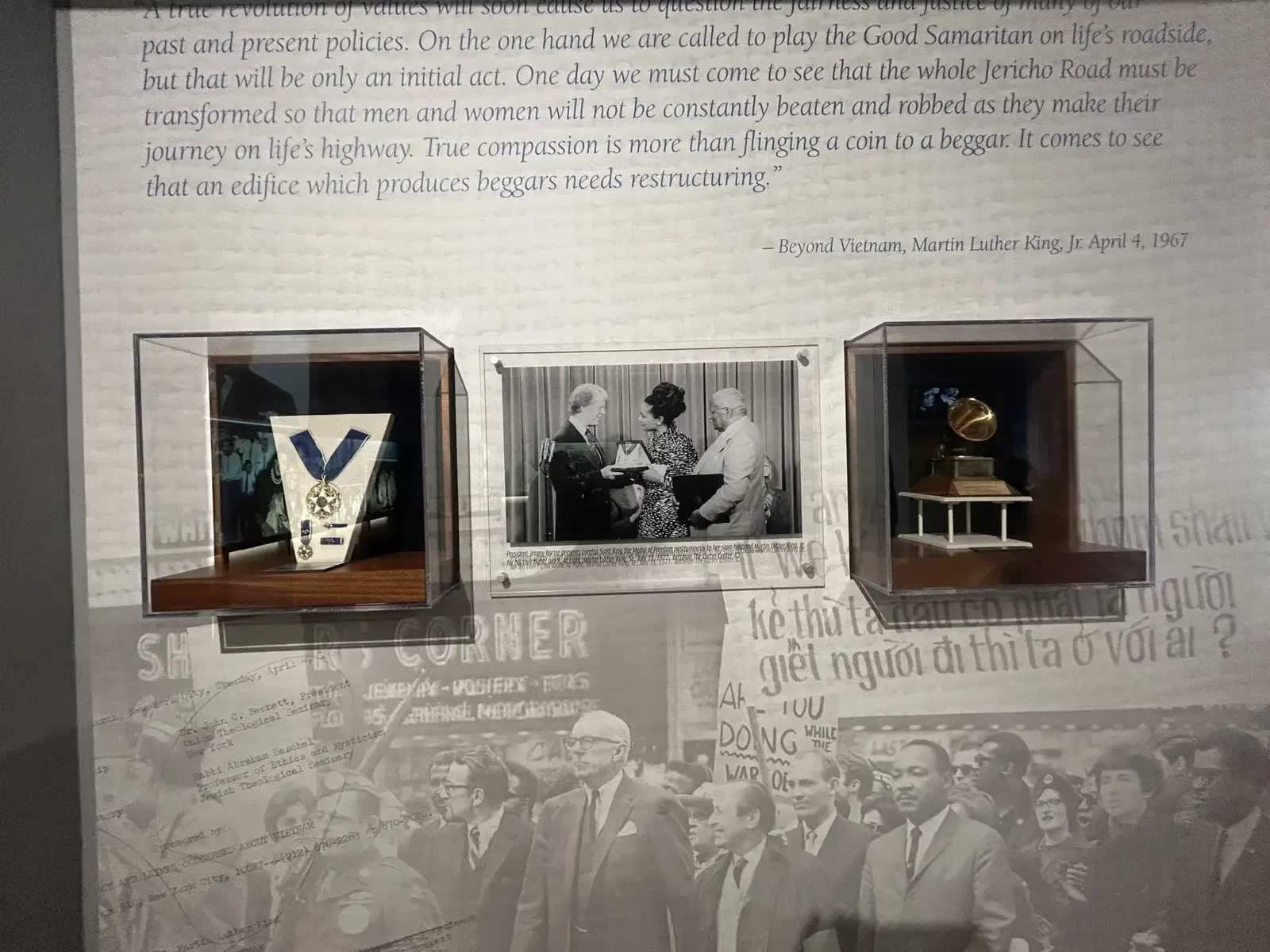
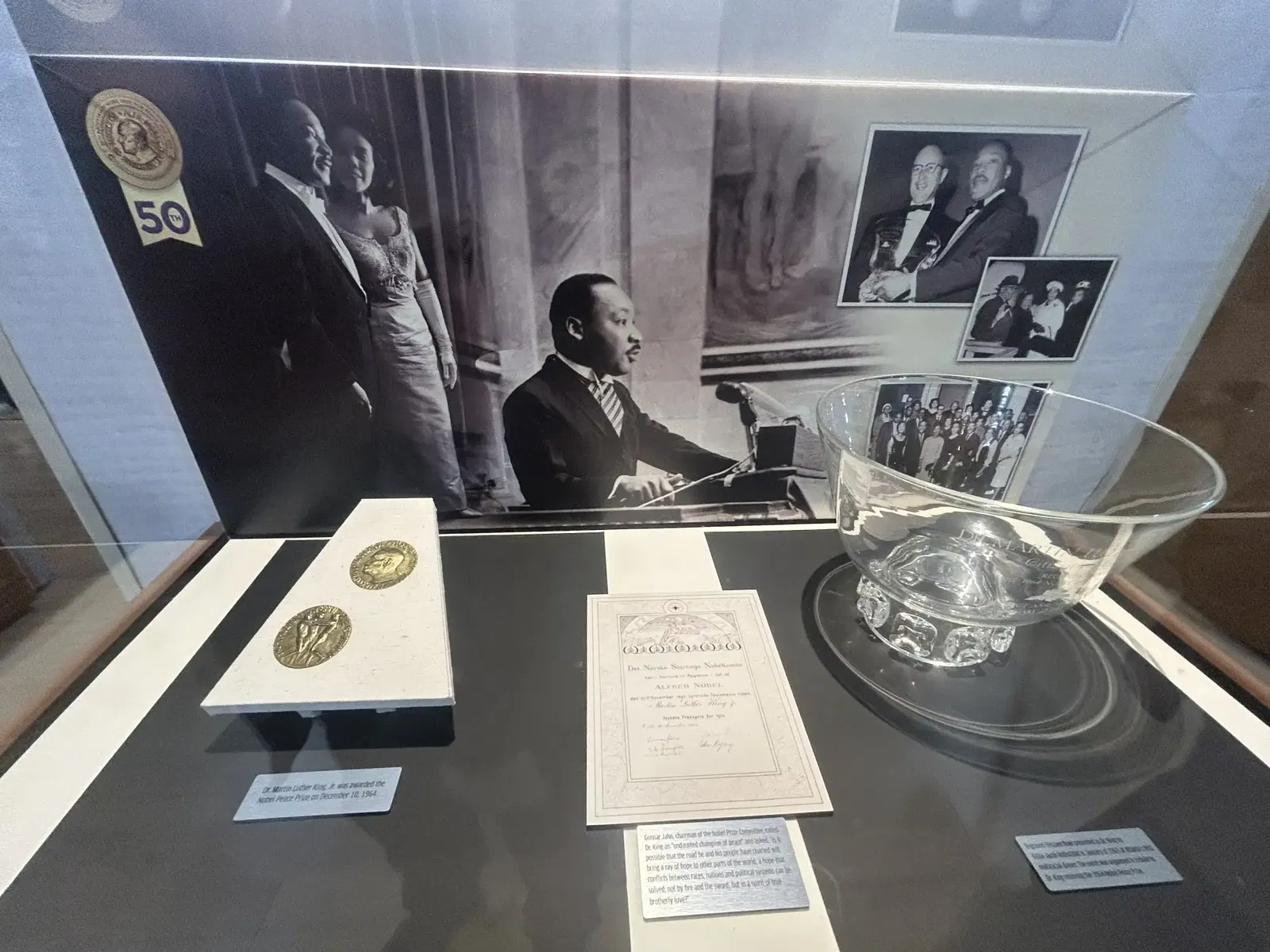
Inside Freedom Hall, the gallery is on the second floor, and the gift shop on the first floor. While there was no security checkpoint in this building, security guards were present. Their duties included of the no-photography policy in the museum - which they were quick to do - and keeping hobos out - which they were slow to do. One such hobo was pestering members of our group (one at a time) for money, claiming he needed it for his wife's alleged hospital expenses. He smelled like he hadn't showered for weeks. Despite the no-photography policy, I took some pictures in the gallery: Nobel Peace Prize award set (2 shots), Grammy award, and FREE-DOM glass sculpture. I liked that Gandhi is included in the exhibit, with an artwork of the Mahatma and Dr. King hanging on a wall in the foyer. (After all, Gandhi's non-violent movements predated Dr. King's ones by one generation.)
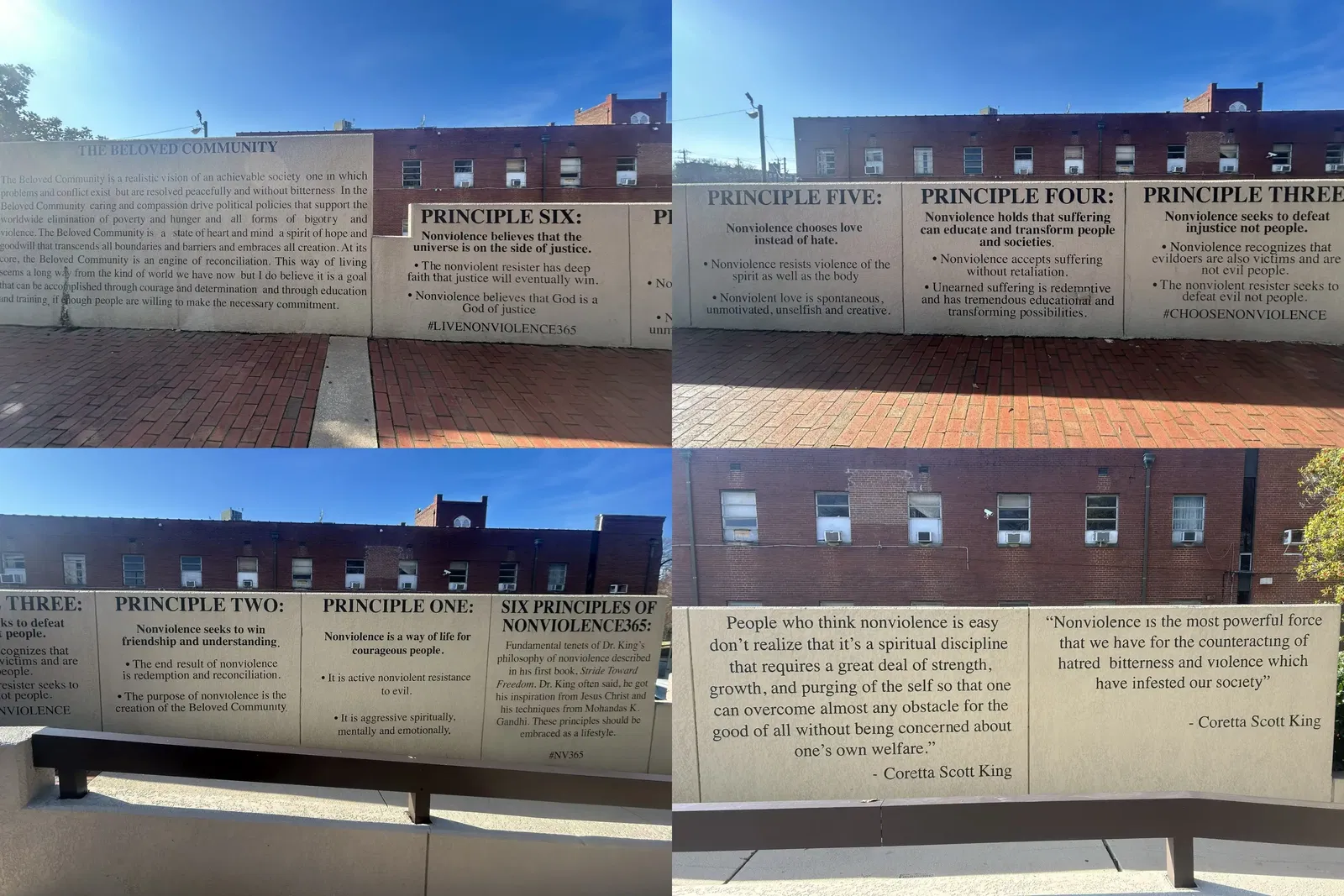
We didn't have time to appreciate the Peace and Meditation Garden, the King Center building itself, or take the shaded walkway behind the fountain. The latter had mural pictures of Dr. King. We then went to a visitor center located across the street in Fire Station No. 6 for more exhibits. In addition, we saw Dr. King's birth home on 501 Auburn Avenue, NE. It was also under renovation, so only the exterior was viewed from the public walkway. Our final stop was at Ebenezer Baptist Church. Thankfully, that wasn't under renovation.
The visitor center in Fire Station No. 6 was a temporary venue for the Martin Luther King, Jr. National Historical Park, which was closed for renovation. The only area of the Historical Park that was available to visitors was the Rose Garden. (Footage of this garden is in the video "Day 2, Day 3 & Day 4: Martin Luther King, Jr." on my YouTube channel, located in playlist "2026-1: The Civil Rights Movement - Atlanta, Montgomery, Selma, Birmingham".)
If you have up to a day to spare, the King Center is worth the visit when done together with the Martin Luther King, Jr. National Historical Park (when opened to visitors), his birth home (when opened to visitors), and Ebenezer Baptist Church. At least a 4-star experience.
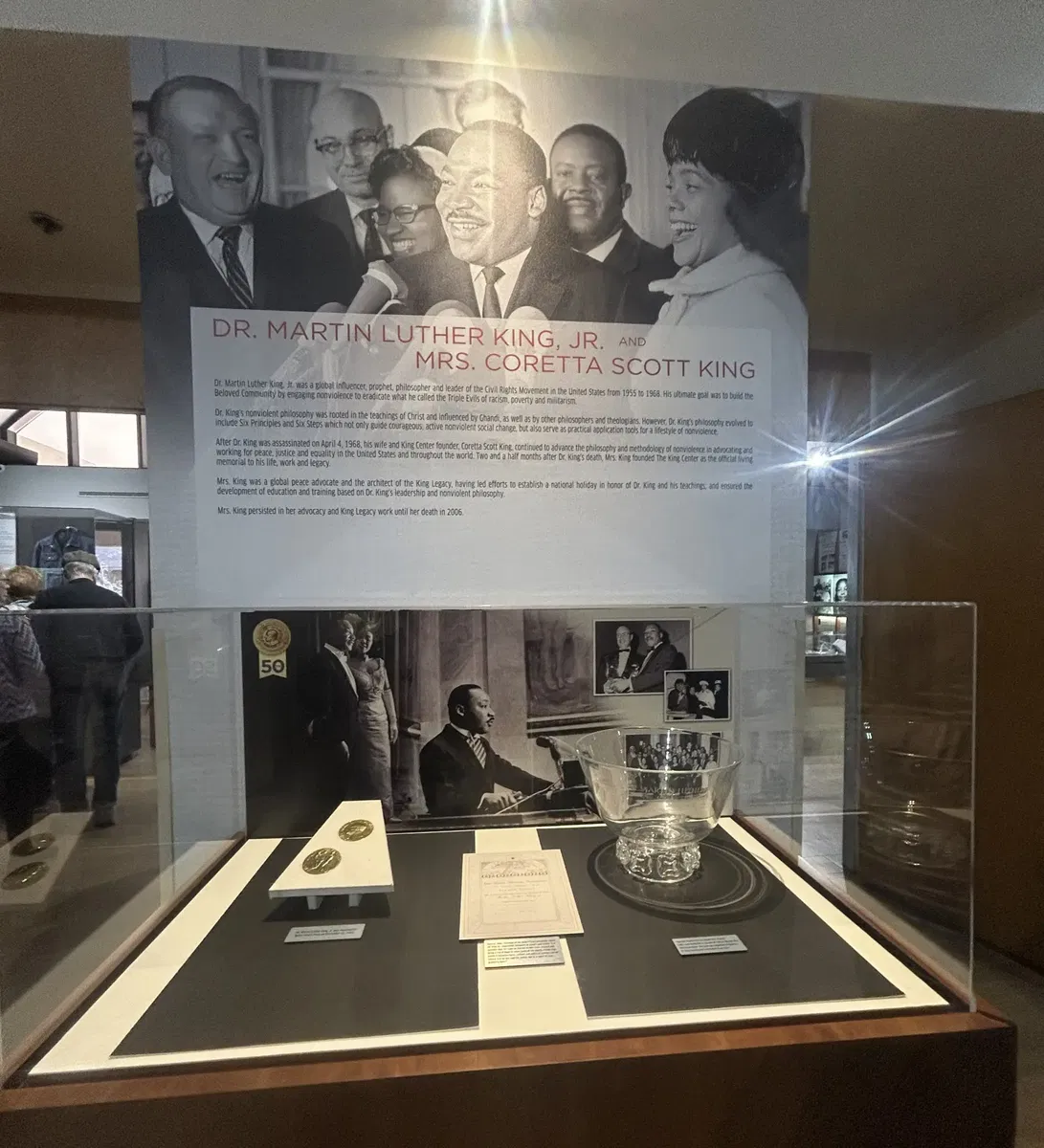
Visited on Jan 5, 2026
This rating is based on the rating of this museum on several other platforms.
Discover museums near King Center For Non-violent Social Change in or around Atlanta.