Images of Villa Lusitano-Romana de Torre de Palma
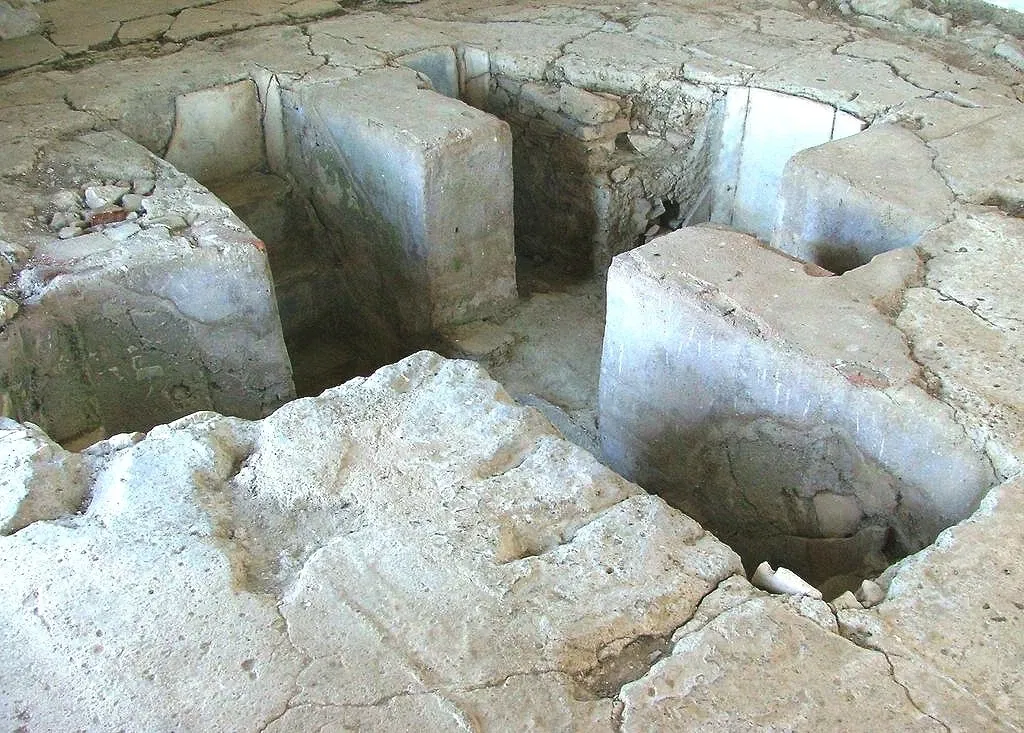

The Villa Lusitano-Romana de Torre de Palma is a significant Roman villa situated near Monforte in Portugal. This historical site was once part of the Roman province of Lusitania. It's one of the largest complexes on the Iberian Peninsula and serves as an excellent example of late antique development.
The Villa Lusitano-Romana de Torre de Palma has a rich history that spans from the 1st to the 5th century. The villa saw increased construction activity and a period of prosperity in the 4th century. This timeline provides a fascinating insight into the evolution of the villa over several centuries.
The main building of the Villa Lusitano-Romana de Torre de Palma covered an impressive area of 10,000 m². It was built around a square courtyard, at the center of which was a water basin. An adjoining column-supported veranda and mosaic floors added to the grandeur of the villa.
The Villa Lusitano-Romana de Torre de Palma is conveniently located about 5 km northwest of Monforte on the main road to Vaiamonte. From the Herdade da Palma estate, a signposted, unpaved road leads to the fenced facility. This makes it easily accessible for visitors.
April to September:
Monday to Saturday – 9.30 a.m. -1 p.m. / 2 p.m. -5.30 p.m.; Sunday and holidays – 10 a.m.-1 p.m.
October to December:
Monday to Friday –9 a.m.-4 p.m.; Saturday, Sunday, and holidays – 10 a.m.-1 p.m.
January to March:
Monday to Friday –9 a.m.-4 p.m.; Saturday –10 a.m.- 1 p.m.
Closed: January 1, Easter, Easter Monday, May 1, December 24, 25, and 31.
En 369 Vaiamonte, Monforte
No exhibitions in Villa Lusitano-Romana de Torre de Palma have been found.
Villa Lusitano-Romana de Torre de Palma has 1 rating.
The Villa Lusitano-Romana de Torre de Palma is an archaeological site and museum located in Monforte, Portugal. This well-preserved Roman villa offers visitors a glimpse into the daily life of ancient Roman inhabitants in the Iberian Peninsula. The site features impressive mosaic floors, remnants of thermal baths, and various structures that showcase the layout of a typical Roman rural estate.
Visitors often appreciate the informative guided tours that help bring the history of the villa to life. The mosaics, in particular, receive high praise for their intricate designs and good state of preservation. The museum section houses artifacts found during excavations, providing context to the ruins and enhancing the overall educational experience.
Some visitors note that the site can be challenging to find due to its rural location, and signage could be improved. Additionally, while the ruins are extensive, some guests mention that more reconstructions or visual aids could help in imagining the villa in its original state.
The site may not be as developed as some larger archaeological parks, which can be seen as both a positive (for its authenticity) and a negative (for those expecting more amenities). However, most visitors find the experience worthwhile, especially for those interested in Roman history and archaeology.
Overall, the Villa Lusitano-Romana de Torre de Palma offers an authentic and educational experience, providing valuable insights into Roman rural life in ancient Lusitania.
This rating is based on the rating of this museum on several other platforms.