
Few museums offer the chance to walk through history quite like stepping inside a genuine Cold War submarine, where sonar stations still hum with stories and torpedo rooms echo with tension.
Submarine museums represent some of the most immersive historical experiences available, transforming decommissioned vessels into time capsules of naval warfare and underwater exploration.
These floating museums preserve the claustrophobic reality of life beneath the waves, from World War II diesel boats to nuclear-powered Cold War behemoths.
Each vessel tells a unique story of technological innovation, human endurance, and the silent service that operated in the ocean's depths.
1. USS Bowfin Submarine Museum and Park
Launched one year after the Pearl Harbor attack, the USS Bowfin earned the nickname 'Pearl Harbor Avenger' during her nine successful Pacific war patrols. Visitors descend into this Balao-class submarine to experience authentic World War II conditions, from the cramped crew quarters to the torpedo room where 16 torpedoes were stored.
The adjacent museum houses an impressive collection of submarine warfare artifacts, including Japanese kaiten suicide torpedoes and detailed exhibits on undersea technology evolution. The audio tour brings the submarine to life with veteran testimonies and period sounds.

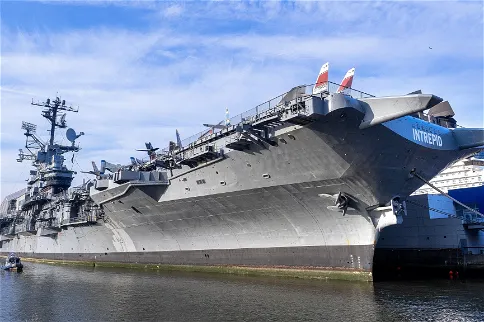
2. Intrepid Sea, Air & Space Museum - USS Growler
USS Growler represents a unique chapter in Cold War history as America's only intact nuclear missile submarine open to the public. This diesel-electric boat carried Regulus nuclear cruise missiles in a specially designed hangar, making it a critical deterrent during the 1950s and early 1960s.
The guided-only tours navigate through impossibly narrow passages to the missile command center and crew spaces. Visitors witness firsthand the technological ingenuity required to launch nuclear missiles from beneath the waves, experiencing the tension of Cold War readiness in Manhattan's Hudson River.
3. HMS Alliance and Royal Navy Submarine Museum
HMS Alliance serves as the centerpiece of the Royal Navy Submarine Museum, representing the pinnacle of British diesel-electric submarine design. Commissioned in 1947, she bridges the gap between World War II boats and nuclear-powered vessels, showcasing post-war technological advancements.
The museum complex includes Britain's first submarine, Holland 1, recovered from the seabed after 70 years. Interactive exhibits explore submarine escape procedures, life support systems, and the secretive world of underwater espionage. The combination of historic vessels and comprehensive galleries makes this the definitive British submarine experience.

4. German U-Boat U-995 and Naval Memorial
U-995 is the world's only remaining Type VII U-boat, the workhorse submarine that defined the Battle of the Atlantic during World War II. Over 700 of these vessels were built, and this sole survivor offers an authentic glimpse into the cramped, dangerous conditions faced by German submariners.
Preserved in remarkable condition beside the Laboe Naval Memorial, the boat showcases the diesel engines, periscopes, and torpedo systems that made these submarines so feared. External displays reveal the pressure hull construction and diving mechanics, while the interior passages demonstrate why U-boat crews called themselves 'iron coffin' occupants.

5. Submarine Force Library and Museum - USS Nautilus
USS Nautilus changed naval warfare forever as the world's first operational nuclear-powered submarine, capable of remaining submerged indefinitely. Her 1958 journey beneath the North Pole proved that submarines could operate under the Arctic ice cap, revolutionizing military strategy.
Walking through Nautilus reveals the quantum leap from diesel boats to nuclear propulsion. The spacious design, advanced sonar systems, and revolutionary reactor compartment (viewed through sealed windows) demonstrate why this single vessel rendered all previous submarines obsolete. The adjacent museum chronicles submarine evolution from the Revolutionary War to modern attack subs.

6. Battleship Cove - USS Lionfish
USS Lionfish represents the Balao-class submarines that turned the tide in the Pacific Theater, sinking over 1,000 Japanese vessels during World War II. This particular boat completed two war patrols and later served in Cold War training operations, bridging two distinct eras of submarine warfare.
Visitors navigate through authentically restored compartments, from the forward torpedo room with its complex firing mechanisms to the maneuvering room where electricians controlled the boat's depth and speed. The compact galley, tiny bunks stacked three-high, and working periscope illustrate the challenging conditions endured during months-long patrols beneath enemy waters.

7. Maritime Museum of San Diego - Soviet Submarine B-39
B-39 offers a rare opportunity to explore a genuine Soviet Foxtrot-class submarine, providing the opposing perspective of Cold War undersea warfare. These diesel-electric boats patrolled extensively during the Cuban Missile Crisis and throughout the 1960s-70s, tracking NATO vessels across the world's oceans.
The stark contrast with American submarines is immediately apparent in the minimalist Soviet design philosophy. Visitors see the cramped conditions, basic amenities, and robust mechanical systems that defined Russian submarine operations. Bilingual exhibits explain Soviet naval doctrine, making this one of the few places Americans can experience Cold War history from behind the Iron Curtain.

8. Western Australian Maritime Museum - HMAS Ovens
HMAS Ovens represents the Oberon-class submarines that served as the backbone of Commonwealth navies during the Cold War, renowned for their exceptional quietness and long-range capabilities. This vessel patrolled Southeast Asian waters for 27 years, conducting surveillance operations and training exercises.
Guided tours illuminate the daily routines of Australian submariners, from operating the sophisticated sonar systems to sleeping in 'hot bunking' arrangements where crew members shared berths across shifts. The torpedo loading demonstrations and diesel engine displays showcase why these conventional submarines remained effective well into the nuclear age. The museum's Indian Ocean setting adds atmospheric authenticity to this Pacific theater veteran.

From World War II patrol boats to nuclear-powered pioneers, these submarine museums preserve an extraordinary dimension of naval history that would otherwise remain hidden beneath classified waters.
Each vessel represents different eras, nations, and technologies, yet all share the common thread of human courage in the most unforgiving environment imaginable.
Visiting these submerged time capsules offers more than historical education; it provides visceral understanding of the silent service and the sailors who ventured into the deep.


