Images of Salses Fortress
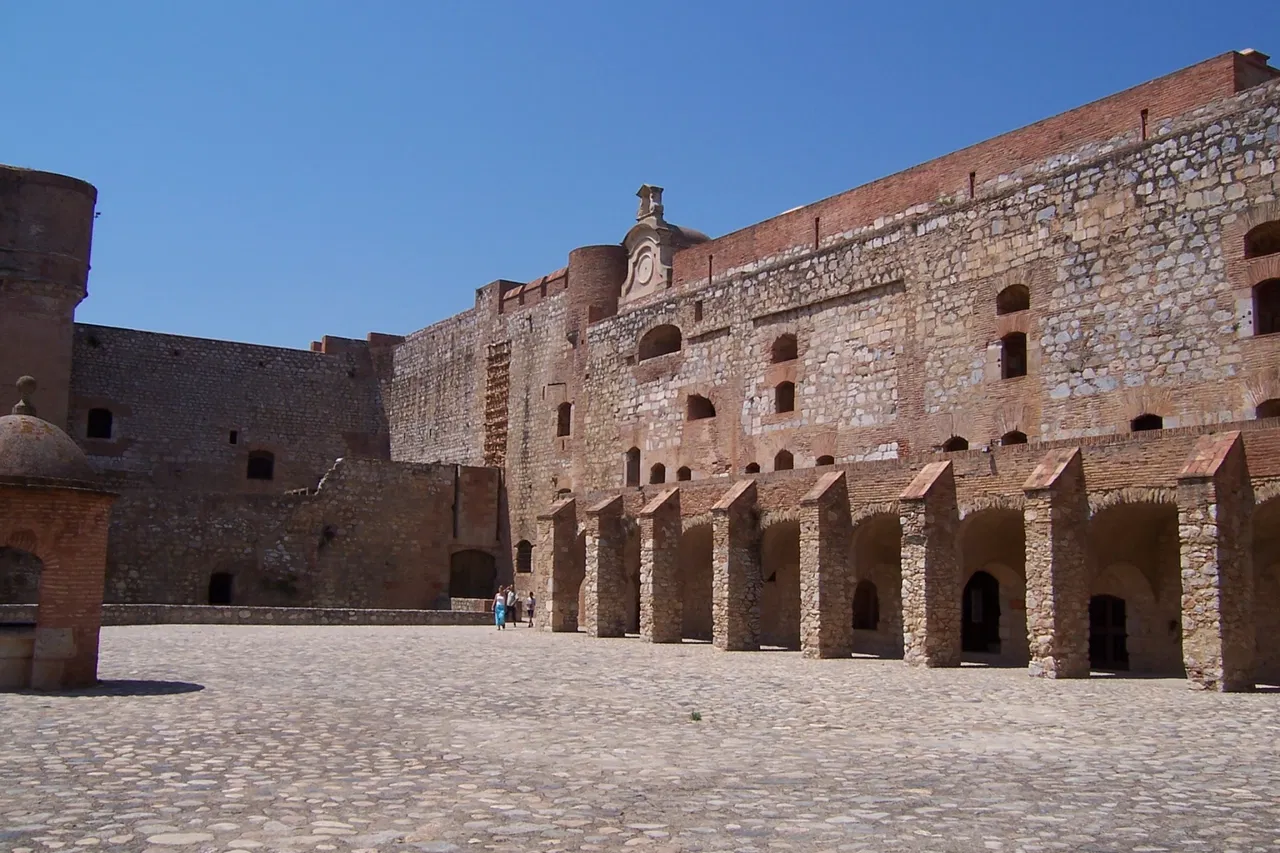

Salses Castle, which is now the Museum of History of Salses, is situated to the north of the town of Salses. It is nestled at the foot of the Corbières, providing a commanding view over the plain of Roussillon. The castle is also located near the old road that once connected Perpignan and Narbonne, following the path of the ancient Via Domitia.
The current fortress of Salses was constructed between the years 1497 and 1503. The design was inspired by the traditional architecture of the castles of Castile. Notably, the fortress incorporated all the advancements in artillery technology of the time, making it a formidable stronghold.
Within the walls of the fortress, visitors can explore a variety of historical structures. These include a parade ground, the governor's house, and a chapel dedicated to San Sebastian. The chapel is noted for its austere design, featuring a pediment and pilasters at the altar. Other structures within the fortress include a prison, stables, and a royal palace.
Le Portichol, Salses-le-Château
Salses Fortress has 1 rating.
Salses Fortress, located in Salses-le-Château, France, is an impressive example of 15th-century military architecture. Visitors appreciate the well-preserved state of the fortress, which offers a glimpse into medieval defensive strategies. The massive walls, intricate layout, and underground passages provide an educational experience about the historical significance of the site.
Many reviewers highlight the informative guided tours, which explain the fortress's history and architectural features in detail. The audio guides available in multiple languages are also praised for their quality and depth of information.
The fortress's strategic location, offering views of the surrounding landscape, is often mentioned as a positive aspect. Some visitors find the climb to certain parts of the fortress challenging, which might be difficult for those with mobility issues.
While most visitors find the experience worthwhile, some mention that the site could benefit from more interactive exhibits or reconstructed period rooms to enhance the visitor experience. Additionally, a few reviewers note that signage could be improved in some areas for self-guided tours.
The on-site museum, though small, receives positive feedback for its collection of artifacts and explanatory panels that provide context to the fortress's history.
In summer, visitors should be prepared for hot weather, as some areas of the fortress offer limited shade. However, the cooler underground sections provide relief and are often highlighted as intriguing parts of the tour.
Overall, Salses Fortress is generally well-regarded for its historical value and the insight it provides into medieval military architecture, making it a noteworthy stop for history enthusiasts and those interested in exploring French heritage.
This rating is based on the rating of this museum on several other platforms.
Discover museums near Salses Fortress in or around Salses-le-Château.